Content strategy for digital marketing is the backbone of successful online presence. At SERPslice Inc, we've seen firsthand how a well-crafted strategy can transform businesses.
In this post, we'll break down the key elements of an effective content strategy and show you how to create one that drives results. Get ready to supercharge your digital marketing efforts with actionable insights and proven techniques.
Content strategy forms the foundation of successful digital marketing. It's a comprehensive plan that guides the creation, delivery, and management of valuable, relevant content to attract and retain a clearly defined audience. At its core, content strategy focuses on understanding your audience's needs and delivering the right information at the right time through the right channels.
An effective content strategy can dramatically improve your digital marketing results. Content Marketing Institute reports that only 37% of B2B marketers have a documented content marketing strategy. This statistic highlights the importance of a well-planned approach that ensures consistency, aligns with business goals, and maximizes resource utilization.
To create a content strategy that drives results, focus on these essential elements:
Your content strategy should directly support your overall business objectives. For example, if your goal is to increase sales of a specific product line, your content strategy might focus on creating in-depth product guides, comparison articles, and customer success stories related to that product.
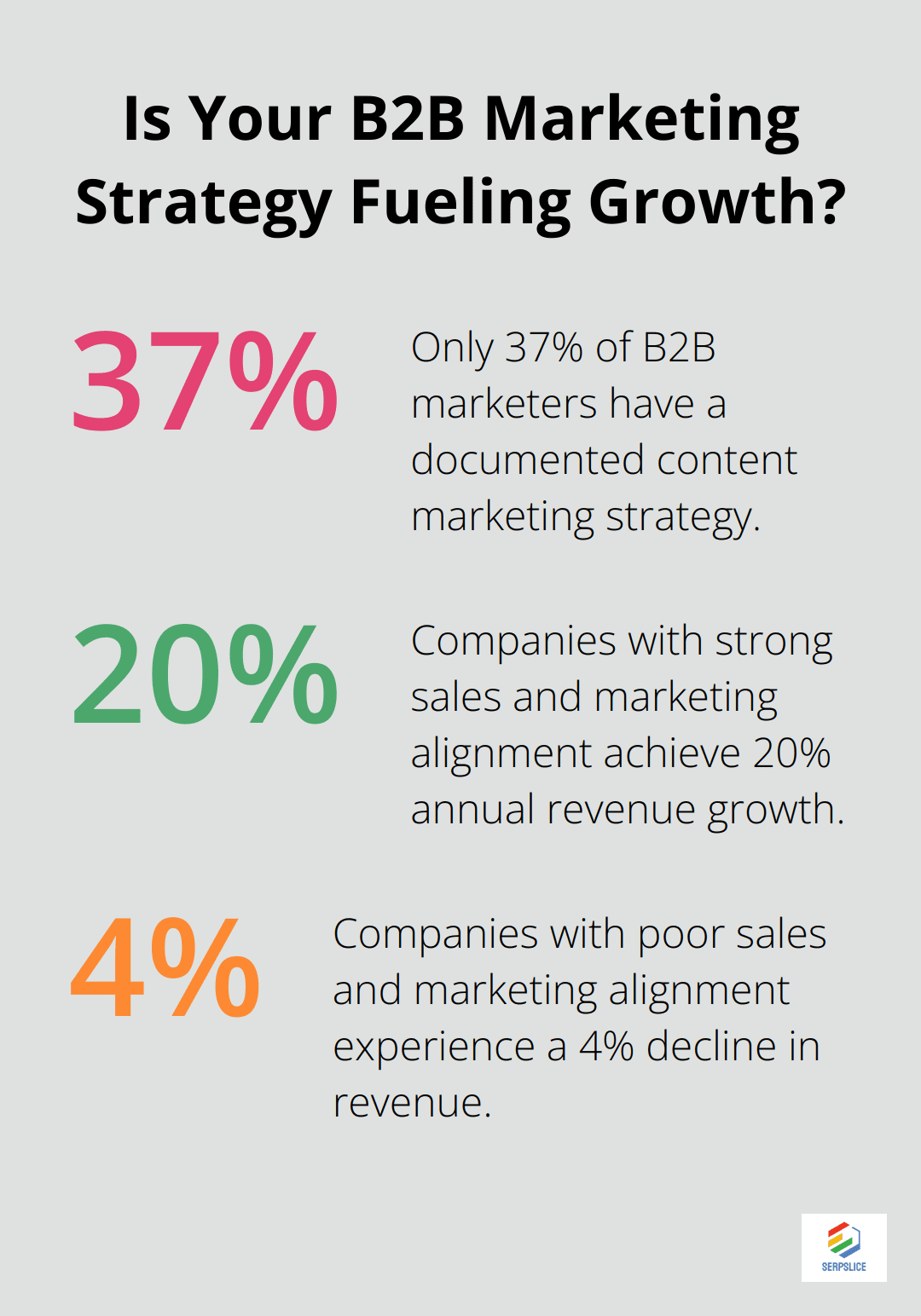
A Harvard Business Review study found that companies with strong sales and marketing alignment achieve 20% annual revenue growth, compared to a 4% decline in companies with poor alignment. This underscores the importance of a content strategy that supports business goals across departments.
The digital marketing landscape changes constantly. Your content strategy should adapt to new trends and technologies. For instance, with the rise of voice search, many businesses now optimize their content for conversational queries, leveraging natural language processing and schema markup.
Industry leaders (like SERPslice Inc) continuously monitor trends and adjust their clients' strategies accordingly. This proactive approach ensures that clients stay ahead of the curve and maintain their competitive edge in the digital space.
As we move forward, let's explore how to create a winning content strategy that will set your business apart in the digital realm.
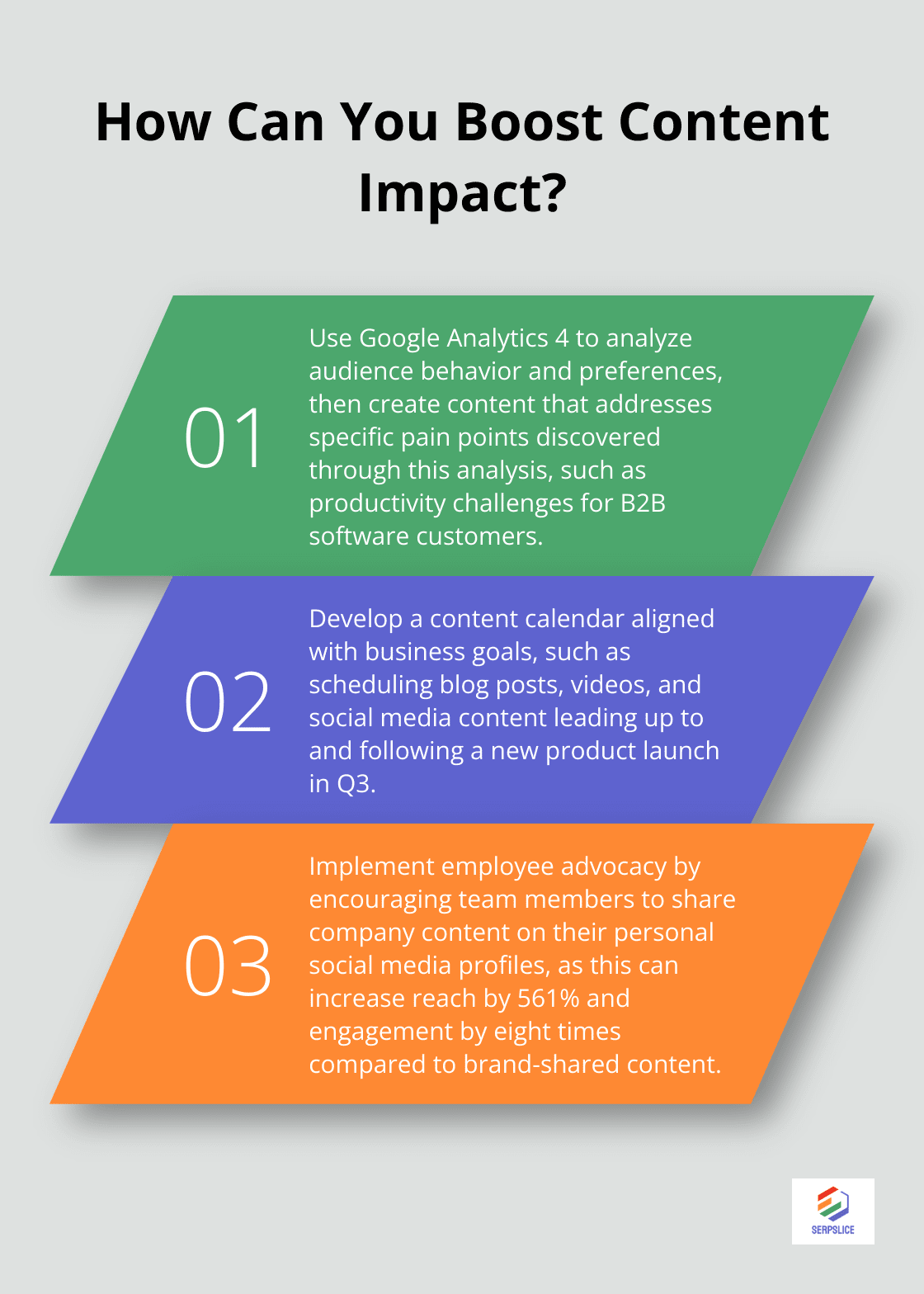
Start with a deep analysis of your audience's world. Use Google Analytics 4 (GA4) to understand their online behavior, preferences, and pain points. This free website analytics dashboard provides a wealth of insights about your website traffic, engagement, and visitors. Social listening tools provide insights into the conversations your audience has online. A B2B software company might discover that their target audience frequently discusses productivity challenges on LinkedIn. This insight could inform content topics that address these specific pain points.
Your content strategy needs clear objectives tied to specific metrics. Instead of vague goals like "increase brand awareness," opt for specific targets such as "increase website traffic by 25% in the next quarter" or "generate 100 qualified leads per month through content marketing efforts." These concrete goals allow you to measure progress and adjust your strategy as needed.
Develop a content calendar that aligns with your business goals and audience needs. If you're launching a new product in Q3, your content calendar should include related blog posts, videos, and social media content leading up to and following the launch.

For distribution, analyze where your audience spends their time online and tailor your approach accordingly. If your target audience is active on LinkedIn, focus on creating thought leadership content for that platform. For B2C brands, platforms like Instagram or TikTok might prove more effective.
Not all content formats work for every audience. Experiment with different types of content to see what resonates best. A recent study found that 73% of consumers have been influenced by videos in their purchasing decisions. However, this might not hold true for every industry or audience segment.
Interactive content like quizzes and calculators often succeed for B2B clients, enhancing engagement, boosting lead generation, and improving customer education. Short-form video content tends to perform better for B2C brands. The key is to test different formats and let the data guide your decisions.
Your content strategy should evolve based on performance data and changing market conditions. Review your metrics regularly, gather feedback from your audience, and prepare to pivot when necessary. This flexibility ensures your strategy remains effective in the ever-changing digital landscape.
As we move forward, let's explore how to implement your carefully crafted content strategy and measure its success. The next section will provide practical tips and tools to bring your strategy to life and track its performance.
Quality trumps quantity in content creation. Produce valuable, original content that addresses your audience's pain points. Content marketing is thriving, with most marketers prioritizing quality over quantity and leadership increasingly bought in - nearly half expect budget increases.
AI-powered tools like Jasper or Copy.ai can streamline your content creation process for initial drafts. However, a human editor should always review and refine the content to ensure it aligns with your brand voice and meets quality standards.
Tools like Feedly or BuzzSumo help identify trending topics in your industry for content curation. Add your own insights to curated content to provide extra value to your audience.
Great content needs to reach your target audience. Email marketing remains one of the most effective distribution channels, with an average ROI of $42 for every $1 spent.
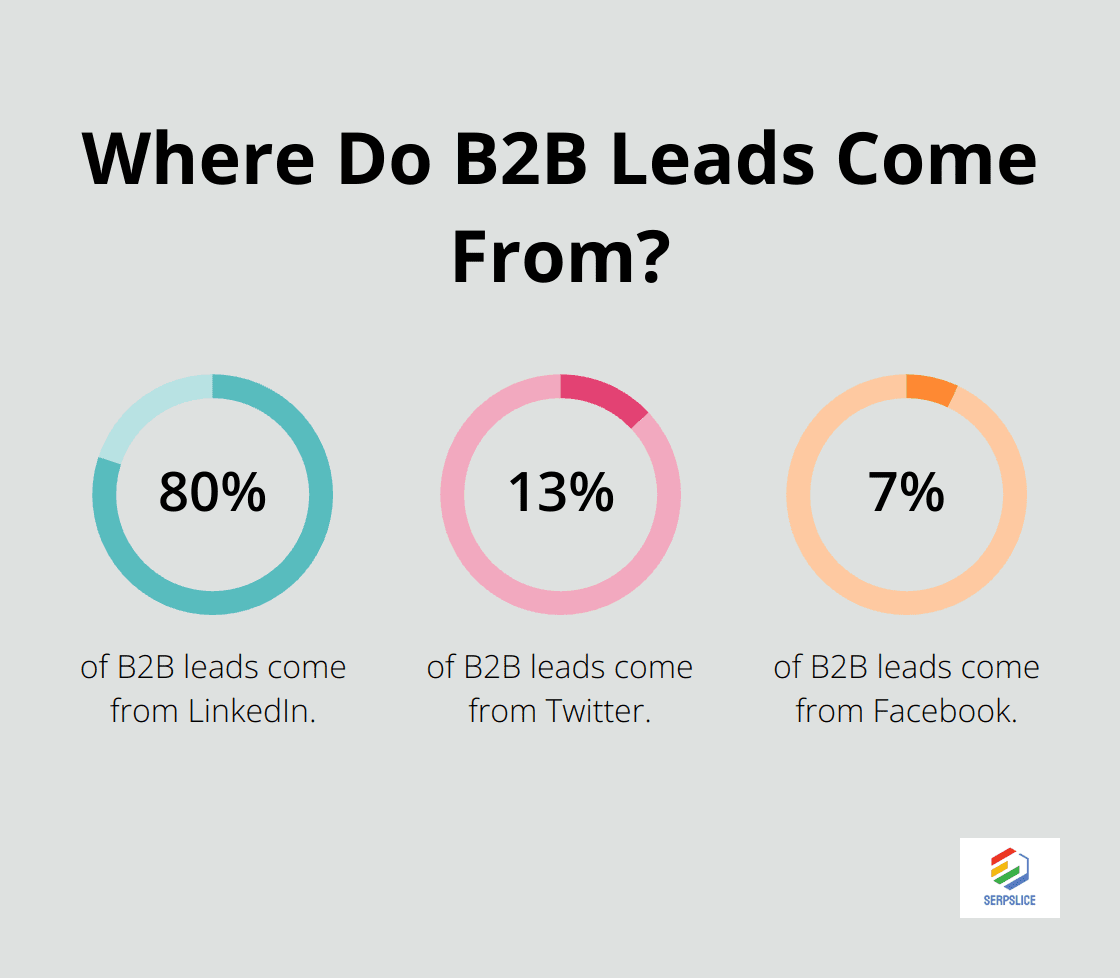
Social media scheduling tools (such as Hootsuite or Buffer) help maintain a consistent posting schedule across platforms. For B2B companies, LinkedIn often proves the most effective platform, with 80% of B2B leads coming from LinkedIn compared to 13% on Twitter and 7% on Facebook.
Employee advocacy can amplify your content reach. Encourage your team to share company content on their personal social media profiles. According to a 2018 study, brand messages published by employees have a 561% higher reach and eight times more engagement than those shared by the brands on their own channels.
Measure the success of your content strategy by tracking the right metrics. Focus on metrics that directly tie to your business goals, rather than vanity metrics like page views.
For lead generation, track conversion rates from content to lead form submissions. If brand awareness is your goal, monitor metrics like social shares, backlinks, and branded search volume.
Google Analytics 4 offers powerful free tools for tracking website performance. Set up custom reports that align with your specific KPIs. For social media performance, each platform has its own native analytics tools, but third-party tools like Sprout Social or Hootsuite can provide more in-depth insights across multiple platforms.
Digital marketing provides a wealth of data to inform your decisions. Review your performance metrics regularly and adjust your strategy accordingly.
If certain types of content consistently outperform others, consider shifting more resources to those formats. For example, if your how-to videos generate more leads than your blog posts, you might want to create more video content.
A/B testing can optimize your content. Test different headlines, content formats, or calls-to-action to see what resonates best with your audience. Even small improvements can add up to significant results over time.
Content strategy requires ongoing attention and refinement. Consistently create high-quality content, distribute it effectively, track performance, and iterate based on data to develop a content strategy that drives real business results.
Content strategy for digital marketing forms the foundation of successful online presence. A well-crafted strategy transforms digital marketing efforts, drives engagement, and boosts business growth. At SERPslice Inc, we tailor strategies to meet each client's unique needs, using data-driven insights to maximize ROI across various digital channels.
The future of content strategy in digital marketing promises excitement and dynamism. We observe a shift towards more personalized, interactive content experiences, with AI and machine learning playing significant roles in content creation and optimization. Voice search and conversational AI reshape our approach to SEO, making adaptability essential for staying ahead.
A solid content strategy sets the foundation for long-term digital marketing success. For businesses aiming to elevate their digital presence, SERPslice offers flexible, results-oriented solutions designed to adapt to the ever-changing digital landscape. In the world of digital marketing, content reigns supreme, shaping the entire landscape of online success.