Cross-channel marketing is reshaping how businesses connect with customers. At SERPslice Inc, we've seen firsthand how this approach can boost engagement and drive conversions.
But which strategies actually work? In this post, we'll explore proven cross-channel marketing tactics that deliver real results.
Cross-channel marketing analytics integrates data from multiple marketing channels to provide a unified view of customer interactions and campaign performance. It creates a seamless, integrated experience across multiple touchpoints. This strategy surpasses mere presence on various platforms; it orchestrates a cohesive journey that guides customers from awareness to purchase.
Cross-channel marketing differs significantly from multi-channel marketing. While multi-channel often treats each channel as a separate entity, cross-channel weaves these channels into a unified strategy. This integration mirrors how real customers interact with brands, hopping between social media, email, websites, and physical stores (often within a single purchase journey).
The ability to leverage data for personalization stands as one of cross-channel marketing's most potent aspects. Tracking customer interactions across channels allows businesses to build comprehensive profiles and tailor their messaging. A customer browsing products on a website might receive targeted email follow-ups or see relevant social media ads. This level of personalization significantly increases conversion chances.
The benefits of implementing a cross-channel strategy are clear and quantifiable. Cross-channel strategies result in 166% higher engagement rates compared to single-channel approaches. This stark difference underscores the effectiveness of a well-executed cross-channel approach.

Implementing cross-channel marketing often requires overcoming organizational silos. Many companies still operate with separate teams for each channel, which leads to disjointed messaging and missed opportunities. Successful cross-channel marketing demands a shift in organizational structure and mindset. It focuses on collaboration and shared goals across all marketing functions.
As we move forward, we'll explore specific strategies that make cross-channel marketing truly effective. These tactics will help you create a more cohesive brand message and improve your conversion rates across all channels.
Consistency boosts brand recognition. Reports show up to a 33% increase in revenue when branding remains consistent across channels. This doesn't mean identical content everywhere. Adapt your core message to fit each platform's unique characteristics. A B2B software company might share in-depth case studies on LinkedIn, while using Twitter for quick tips and industry news.
Data collection alone isn't enough – anticipate customer needs. Companies can achieve double, triple, or even higher conversion rates through smart testing. Tools like Amplitude analyze customer behavior patterns and predict future actions. This enables targeted offers at the right time. For example, if a customer frequently browses running shoes without purchasing, a personalized email with a limited-time discount on their favorite brand might trigger a sale.
Retargeting transforms marketing when executed correctly. Retargeted ads typically have a click-through rate 10 times higher than display ads. However, timing and frequency are critical. Showing retargeted ads 5-7 times over a 30-day period (not more, to avoid customer annoyance) yields the best results.
Social media serves as more than a brand awareness tool – it's a powerful conversion driver when properly integrated. Companies can increase their social media-driven sales by up to 40% by creating a seamless path from social content to purchase. This involves using shoppable posts on Instagram, Twitter's website cards for direct traffic, and Facebook's lead generation ads to capture interested prospects.
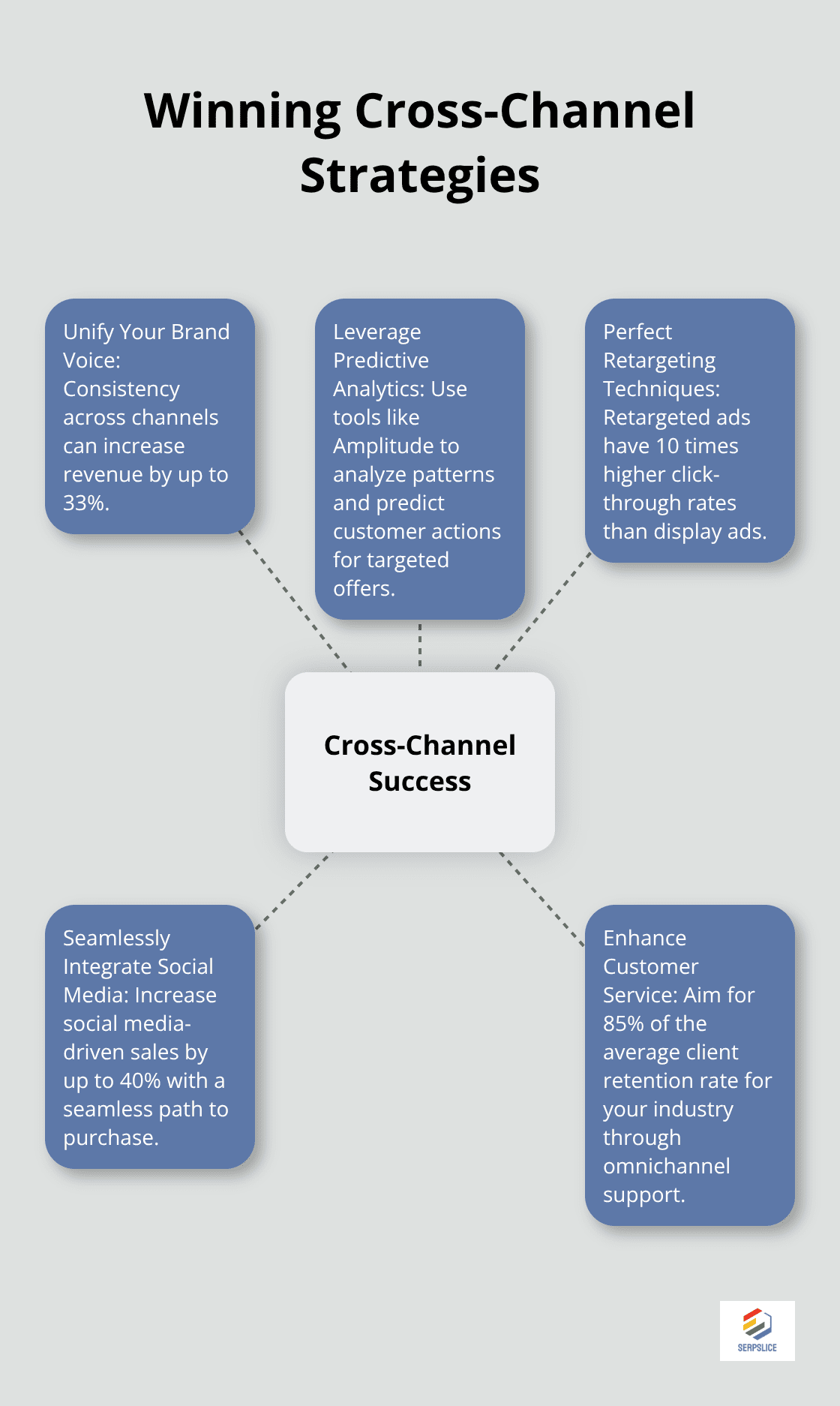
In today's fast-paced world, omnichannel customer service is essential. Good customer retention in your company should aim for 85% of the average client retention rate for your industry. Tools like Zendesk unify customer interactions across email, chat, phone, and social media. This ensures that your team has full context of a customer's history and can provide personalized support, regardless of the contact channel.
The implementation of these strategies often requires a shift in mindset and organizational structure. However, the potential rewards are substantial. As we move forward, it's important to understand how to measure the success of these cross-channel marketing efforts. Let's explore the key performance indicators and tools that will help you track and optimize your cross-channel campaigns.
Measuring the success of cross-channel marketing campaigns requires a shift from traditional siloed metrics to customer-centric KPIs. These metrics reflect the overall impact of campaigns across all touchpoints:
Effective tracking of cross-channel performance requires robust analytics tools that integrate data from various sources. Some powerful options include:
Understanding the customer journey optimizes cross-channel marketing efforts. Tools like Hotjar and FullStory allow visualization of user interactions with digital properties, identifying potential friction points and opportunities for improvement.
Key areas to analyze include:
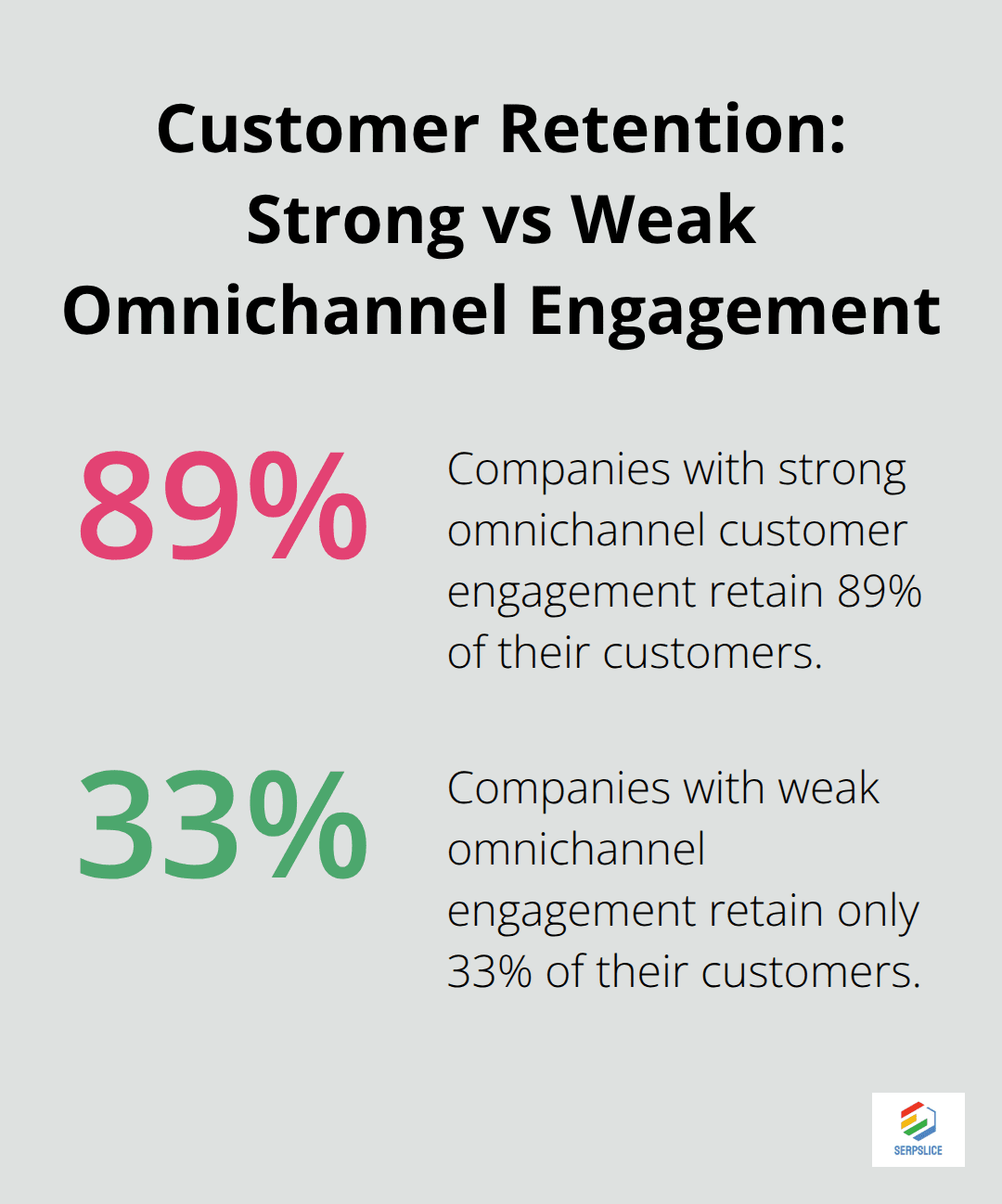
Companies with omnichannel customer engagement strategies retain on average 89% of their customers, according to a June 2025 report.
To maximize the effectiveness of cross-channel marketing, implement a rigorous A/B testing program. Test different messaging, creative elements, and channel combinations to identify what resonates best with the audience.
Examples of tests include:
Small improvements can have a significant impact when applied across multiple channels.
Cross-channel attribution is a crucial aspect of measuring success across different marketing channels. It helps determine which touchpoints are most effective in driving conversions and guiding future strategy decisions.
Cross-channel marketing transforms the digital landscape. It integrates multiple touchpoints to create a seamless customer experience that drives engagement and boosts conversions. The strategies we explored are practical approaches that yield tangible results, increasing engagement rates by 166% compared to single-channel strategies.
Success in cross-channel marketing demands continuous adaptation. The digital landscape evolves rapidly, with new platforms emerging and consumer behaviors shifting. Marketers must analyze data and adjust strategies to maintain effectiveness in this dynamic environment.
We at SERPslice Inc understand the complexities of navigating this landscape. Our strategy-first approach to digital marketing ensures businesses can adapt and thrive where cross-channel integration is essential. We help our clients stay ahead of the curve and maximize their marketing ROI through data-driven solutions and continuous optimization.
Protected by Security by CleanTalk