At SERPslice Inc, we've witnessed — up close and personal — how Agile SEO analytics can revolutionize digital marketing strategies. Think of it like this: take the nimble, adaptable nature of Agile, mix it with the laser-focused precision of SEO, and you get campaigns that are not just smarter but also wickedly efficient.
So, you might be asking yourself: how do we jump on this bandwagon? In this post, we'll dive into the nitty-gritty of implementing Agile SEO analytics in your organization. From key metrics that actually matter, to the processes and tools that keep you ahead in the crazy, ever-evolving world of search engine optimization, we've got you covered.
Agile SEO Analytics is shaking up digital marketing. It's not just crunching numbers - it's leveraging them in real-time to make magic happen. Essentially, Agile SEO Analytics marries the nimbleness of Agile methodologies with the precision of SEO.
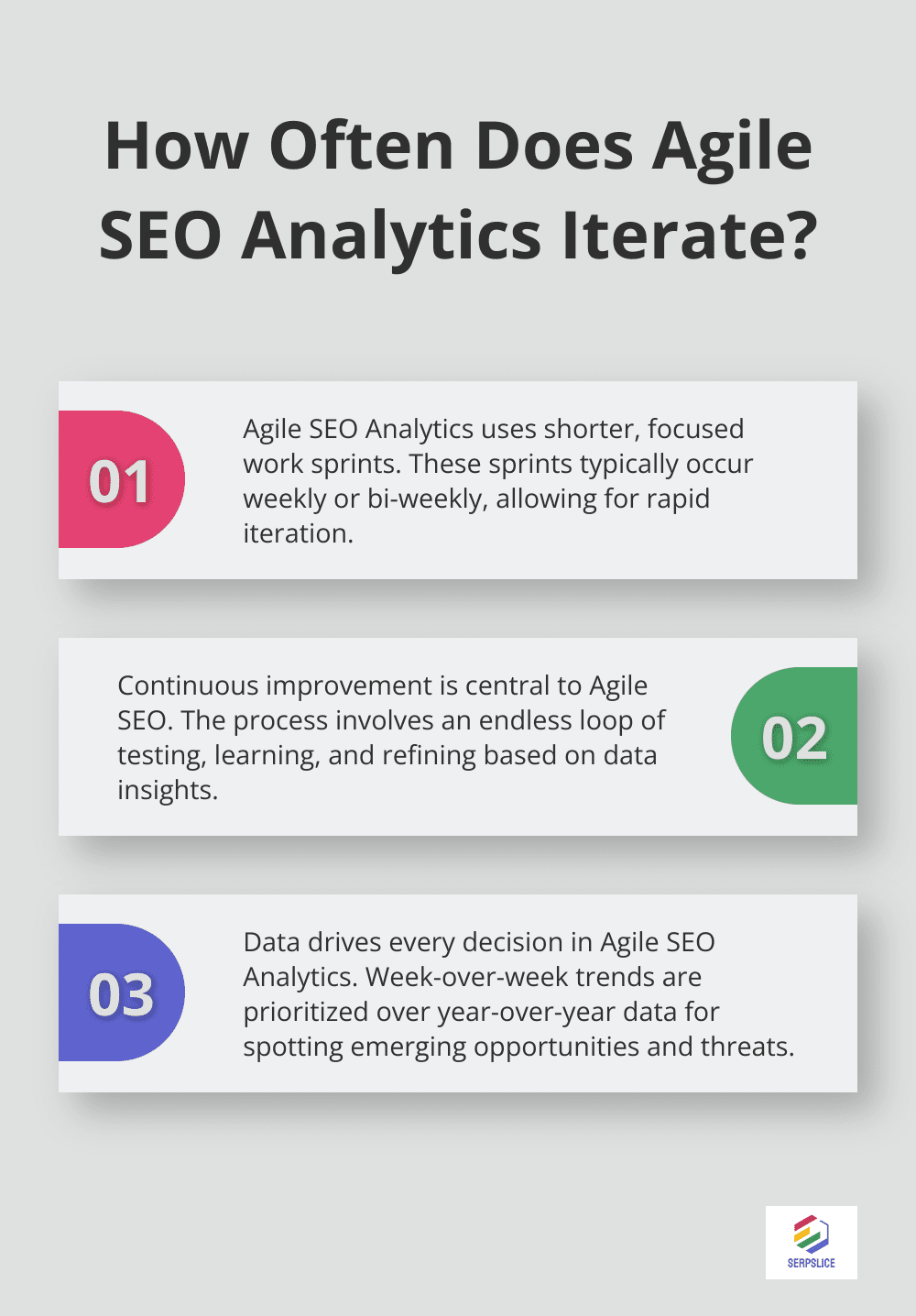
Think shorter, laser-focused work sprints. Forget waiting months for results; we're talking weekly or bi-weekly cycles. This rapid iteration lets you pivot quickly based on data insights. Spot a ranking drop for a key term? No need to wait for a quarterly review - you investigate and act, pronto.
At the heart of Agile SEO is continuous improvement. It's an endless loop of testing, learning, refining. Year-over-year data? Sure, but week-over-week trends? Goldmine. That's where you spot emerging opportunities (and threats).
With Agile SEO Analytics, data drives every single decision. There's no room for guesswork. Let the numbers lead the way - and trust me, the results speak for themselves.
Agile SEO Analytics thrives on collaboration and transparency. Regular stand-ups, sprint reviews... everyone's on the same page. This ensures SEO efforts align with broader business goals and teams share insights across departments. It's a well-oiled machine.
In Agile SEO Analytics, it's all about metrics that move the needle. Vanity metrics like raw traffic? Nice, but not the endgame. We prioritize conversion rates and customer lifetime value - the real indicators of SEO's impact on business growth.
Adopting an Agile approach to SEO analytics keeps companies ahead in the breakneck world of search engine optimization. It's not about just keeping pace with algorithm changes; it's about predicting them, adapting swiftly, and staying ahead of the curve. This agility is the secret sauce for consistent results in an ever-evolving digital landscape.
So, now that we've broken down Agile SEO Analytics, let's delve into the key metrics driving this approach and see how they can supercharge your SEO strategy.
So, at the core of Agile SEO, we've got a handful of key metrics that can take your strategy to the moon...or down the drain. Forget tracking every digital sneeze – let's talk about the numbers that truly matter. Ready? Let's dive into the key metrics to supercharge your SEO game.
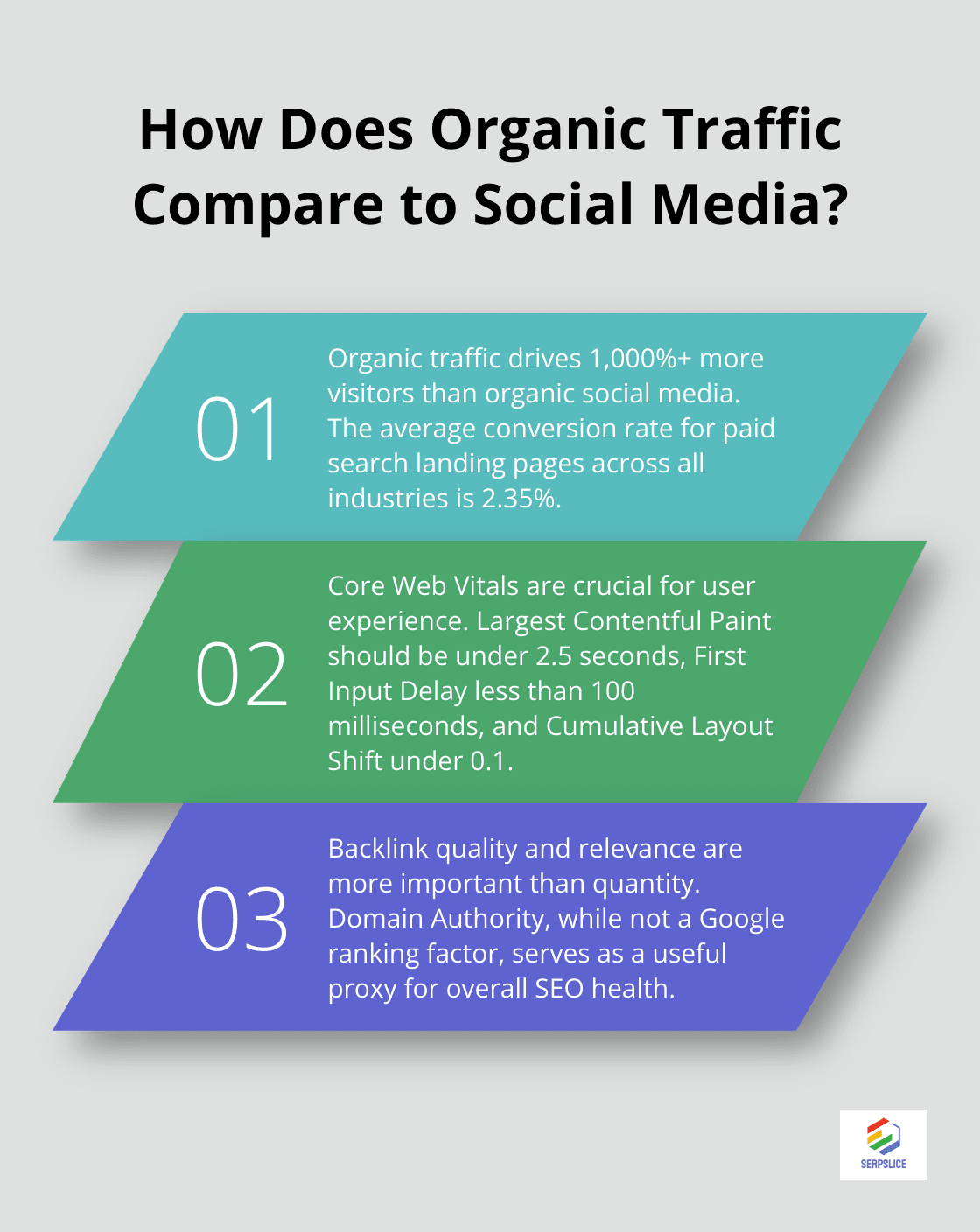
Organic traffic – yeah, it's the big cheese, driving 1,000%+ more traffic than organic social media. But listen, raw visitor numbers? They only scratch the surface. The real deal is conversion – how many of those visitors actually do something. That's where conversion tracking steps in.
Set up goal tracking in Google Analytics to monitor specific actions (newsletter sign-ups, product purchases, or contact form submissions). Then, you nail down your conversion rate by dividing the number of conversions by total organic visitors.
A study found that the average conversion rate for paid search landing pages across all industries is 2.35%. Below that? Get to work. Above it? Cool – but don't get lazy.
Of course, keyword rankings matter, but don't lose your marbles over individual rankings. It's all about your overall visibility for target keyword clusters. Tools like SEMrush or Ahrefs give you the big picture.
Pay close attention to your share of voice – the percentage of all organic clicks for your target keywords that your site captures. This gives a more holistic view of SEO performance than obsessing over single rankings.
Core Web Vitals – yeah, Google cares about those. Keep an eye on these:
Use Google's PageSpeed Insights to track these. Falling short? Time to tune up your site's performance.
Okay, Domain Authority isn't a Google ranking factor, but it's a useful proxy for overall SEO health. Monitor your DA with Moz's tools.
But here's the kicker – the quality and relevance of your backlinks. Use tools to monitor your link profile. Look for links from high-authority sites in your niche. Quality > Quantity. Every. Single. Time.
These metrics? They're not carved in stone. The beauty of Agile SEO? Flexibility. Regularly reassess which metrics are most relevant to your goals and adjust tracking accordingly. This will help you stay ahead in the constantly shifting world of search engine optimization.
Now that we've nailed down the essential metrics, let's move on to implementing Agile SEO Analytics processes in your organization.
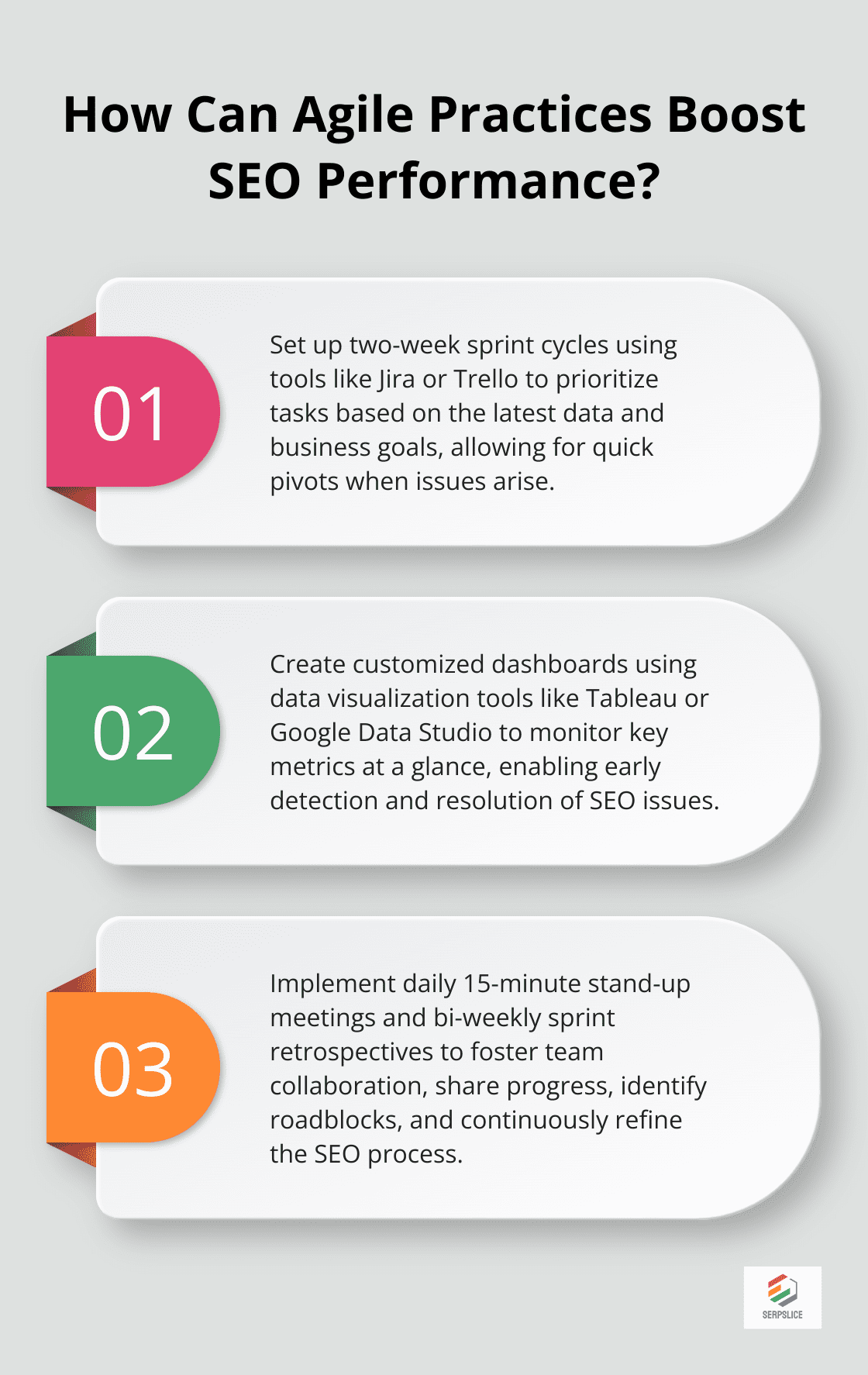
Two-week sprints-the perfect sweet spot between getting stuff done and remaining nimble. At the start of every sprint, tasks should be prioritized based on the latest data and business goals. Tools like Jira or Trello? Your best friends for managing this chaos.

Let's say you see a sudden nosedive in rankings for a crucial keyword. That becomes sprint priority numero uno. You might zero in on optimizing content, fixing technical hiccups, or beefing up your link-building game targeting that pesky keyword.
Enter data visualization tools-your magic mirror into SEO land. Tableau offers a lot of customization, while Google Data Studio is a pretty solid free option. Set up dashboards that showcase key metrics at a quick glance (think: organic traffic trends, conversion rates, keyword position shifts).
Spotting issues early? That's the name of the game. Notice a steady dip in organic traffic to a particular product category? Boom, investigate and fix it before it drains your revenue.
Cue daily stand-ups-quick 15-minute huddles where everyone shares what they did yesterday, what's on deck for today, and any roadblocks in sight.
Then we have sprint retrospectives every couple of weeks. These honest heart-to-hearts dive into wins, losses, and what needs tweaking. Straight shooting is vital to honing the process.
Consistency and actionable takeaways-key to making these meetings really count.
Agile SEO is all about rolling with the punches. If the data screams that your current strategy is a dud, why wait for a quarterly review? Use sprint cycles, data visualizations, and those collaborative stand-ups to pivot, pronto.
The true magic of Agile? Its ability to morph on the fly. Tailor these processes to suit your specific needs and goals. Stay ahead of the curve in the whirlwind world of search engine optimization.
Agile SEO analytics-fancy term, game changer. It's revolutionizing how companies tackle search engine optimization. The gist? Businesses adapt on the fly, make moves based on hard data, and see real results. Efficiency goes up, teamwork gets better, and strategies pivot with real-time insights.
Start small, go big later. Nail those high-impact tasks in quick sprint cycles and throw money at solid data visualization tools to decode those gnarly metrics fast. And keep the convo open with your squad-regular stand-ups, honest retrospectives (flexibility is the magic word here).
At SERPslice, we've seen it firsthand-agile SEO analytics does wonders for clients. Mix our strategy-first mindset with agile methods and boom, tailored solutions that fit each business's unique puzzle. As the digital marketing world spins faster, jumping on the agile SEO analytics train is no longer an option-it's a must to stay ahead in the online game.