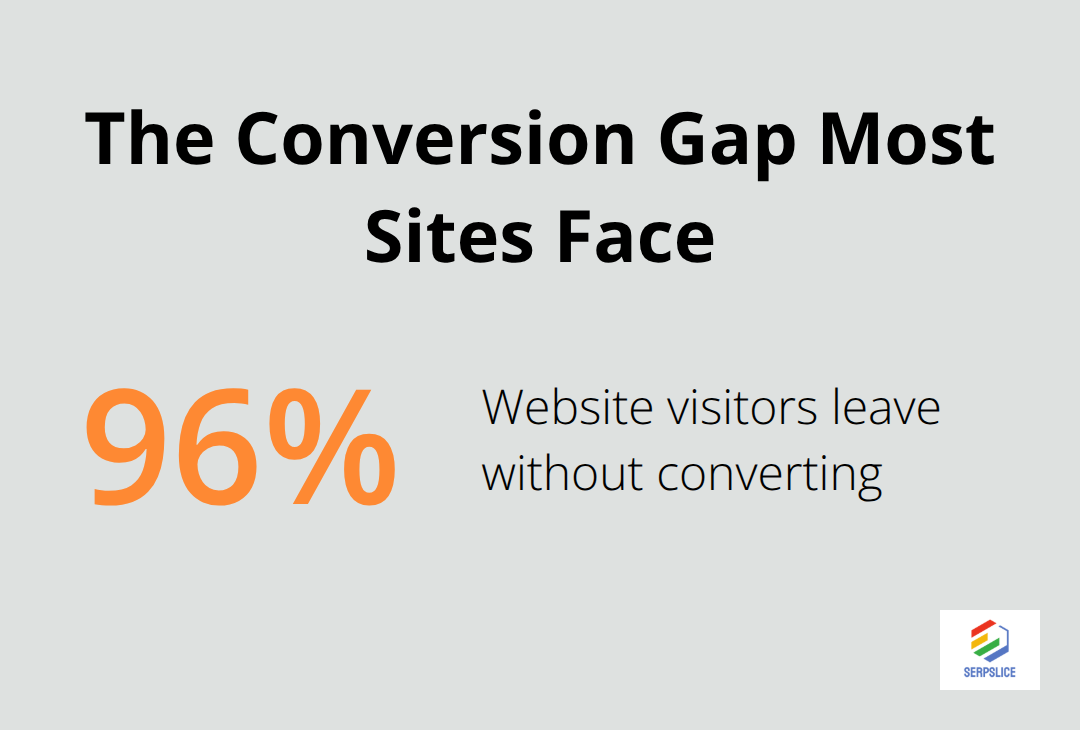
Most businesses lose 96% of their website visitors without converting them into customers. These potential buyers simply browse and leave, never to return.
We at SERPslice Inc know that smart retargeting strategies can recapture these lost opportunities. By showing targeted ads to people who already visited your site, you can boost conversion rates by up to 10 times compared to standard display advertising.
Retargeting operates through tracking pixels, small pieces of code that websites place on visitor browsers. When someone visits your site, this pixel creates a cookie that identifies them as they browse other websites. Platforms like Google Ads and Meta then serve your ads to these cookied users across their networks. The average retargeting pixel fires within 0.3 seconds of page load and captures visitors according to tracking data.
Pixel-based retargeting tracks anonymous website visitors and shows ads immediately after they leave your site. This method captures more potential customers than list-based approaches. List-based retargeting targets known contacts from your email database, which achieves higher conversion rates but reaches smaller audiences. Dynamic retargeting goes further and shows specific products visitors viewed, which increases conversion rates compared to static ads. Facebook's dynamic product ads and Google's responsive display ads automatically pull product information from your catalog and create personalized experiences without manual setup.
Google Ads reaches 90% of internet users worldwide through its Display Network, while Meta accesses 3.8 billion monthly active users across Facebook and Instagram. Google's retargeting achieves solid conversion rates with competitive costs per click. Meta delivers strong engagement with good conversion rates and reasonable CPMs. LinkedIn retargeting works best for B2B companies and generates strong return on ad spend despite higher costs.
Smart advertisers allocate 15-30% of budgets to retargeting campaigns and focus on 7-14 day windows for optimal performance without overwhelming prospects. Most platforms require a minimum audience size of 100 users before campaigns activate (though Facebook needs 20 for basic campaigns). Frequency caps prevent ad fatigue, with research showing performance declines after users see the same ad multiple times.
These technical foundations set the stage for understanding why retargeting delivers such powerful results compared to traditional advertising methods. Pixel data tracking reveals customer journey patterns that inform retargeting sequences, with abandoned cart campaigns generating strong ROI improvements.
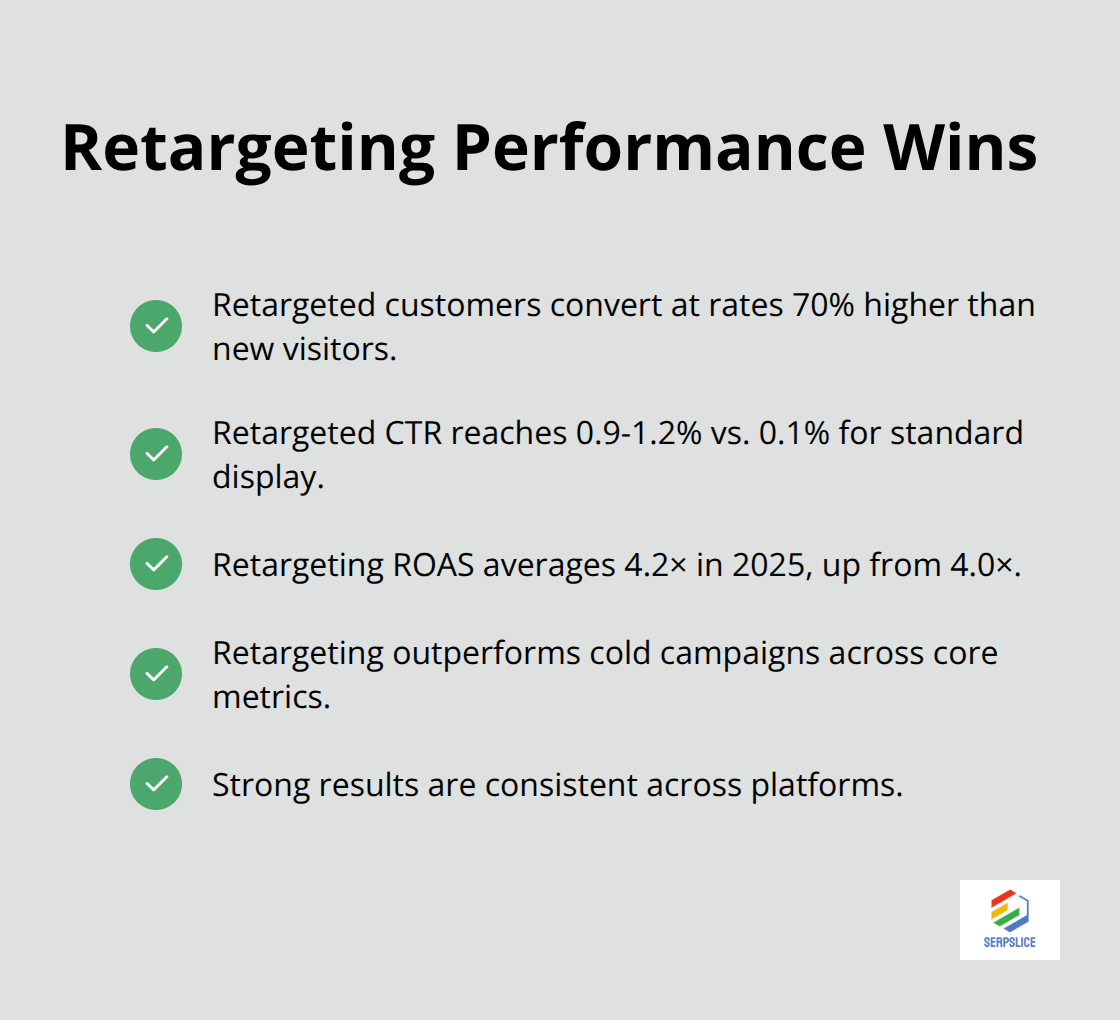
Retargeting campaigns consistently outperform standard display ads across every meaningful metric. Meta reports that retargeted ads achieve conversion rates of 8-12% compared to 1-2% for cold traffic campaigns. Google Ads data shows retargeted campaigns deliver click-through rates of 0.9-1.2%, nearly ten times higher than standard display ads at 0.1%. The average return on ad spend for retargeting reaches 4.2× in 2025, up from 4.0× the previous year, while cold traffic campaigns struggle to exceed 2×. AdRoll research confirms that retargeted customers convert at rates 70% higher than new visitors.
Smart marketers recognize retargeting as the most cost-effective digital advertising strategy available today. Cost per thousand impressions for retargeting dropped to $8.60-$10.20 in 2025 (an 18% year-over-year decrease). Cost per click averages $0.95-$1.25 for retargeted ads versus $2.50-$4.00 for search campaigns that target new customers. Meta's retargeting achieves CPMs of $8.50 with conversion rates that justify every dollar spent. The math is simple: warm prospects cost less to target and convert more than cold traffic.
Retargeting creates multiple touchpoints that cement brand awareness without overwhelming prospects. Research shows the average Facebook user sees retargeting ads 3.5 times before conversion, but performance drops after six exposures. Fashion Nova achieves a 90% repeat purchase rate through strategic retargeting that combines user-generated content with personalized product recommendations. Nike's personalized retargeting strategies contributed to 24% growth in digital sales through relevant product displays at optimal moments. Frequency caps between 5-7 impressions maximize brand recall while they prevent ad fatigue that damages customer relationships.
Dynamic retargeting shows specific products visitors viewed and increases conversion rates compared to static ads. Facebook's dynamic product ads and Google's responsive display ads automatically pull product information from your catalog and create personalized experiences. Ads that utilize user-generated content and testimonials generate 2.3x higher click-through rates than standard ads. Responsive display ads achieve a 32% higher engagement rate than static banner ads (highlighting the effectiveness of dynamic content). These personalized approaches transform casual browsers into qualified leads through relevant product reminders.
The superior performance metrics and cost advantages position retargeting as an essential component of any digital marketing strategy, but success requires proper implementation and strategic campaign management.
Successful retargeting campaigns demand precise audience segmentation that moves beyond basic website visitors. Create separate segments for product viewers, cart abandoners, and previous customers because each group requires different messaging approaches. Shopify merchants who utilize first-party data report higher conversion rates compared to campaigns that rely solely on third-party data.
Segment visitors who spent more than three minutes on product pages versus those who bounced quickly, as engagement time indicates purchase intent. Geographic segmentation works particularly well for local businesses, with location-based retargeting that drives more in-store visits compared to desktop ads according to recent studies.
Creative optimization makes the difference between campaigns that waste budget and those that generate profit. Video retargeting ads increase purchase intent by 20% more than static image ads, while dynamic creative optimization enables real-time decisions that customize visuals for each audience segment.
Test different ad formats aggressively because responsive display ads achieve higher engagement rates than static banner ads. Sephora's predictive retargeting that uses AI resulted in increased repeat purchases and higher click-through rates compared to traditional marketing methods.
Smart frequency caps prevent ad fatigue and limit exposure to 5-7 impressions per user, as performance declines significantly after users see the same ad six times. The average Facebook user sees retargeting ads 3.5 times before conversion (but performance drops after six exposures).
Campaign durations of 7-14 days optimize performance without overwhelming prospects. Short retargeting windows see improvement over longer campaign durations according to current data.
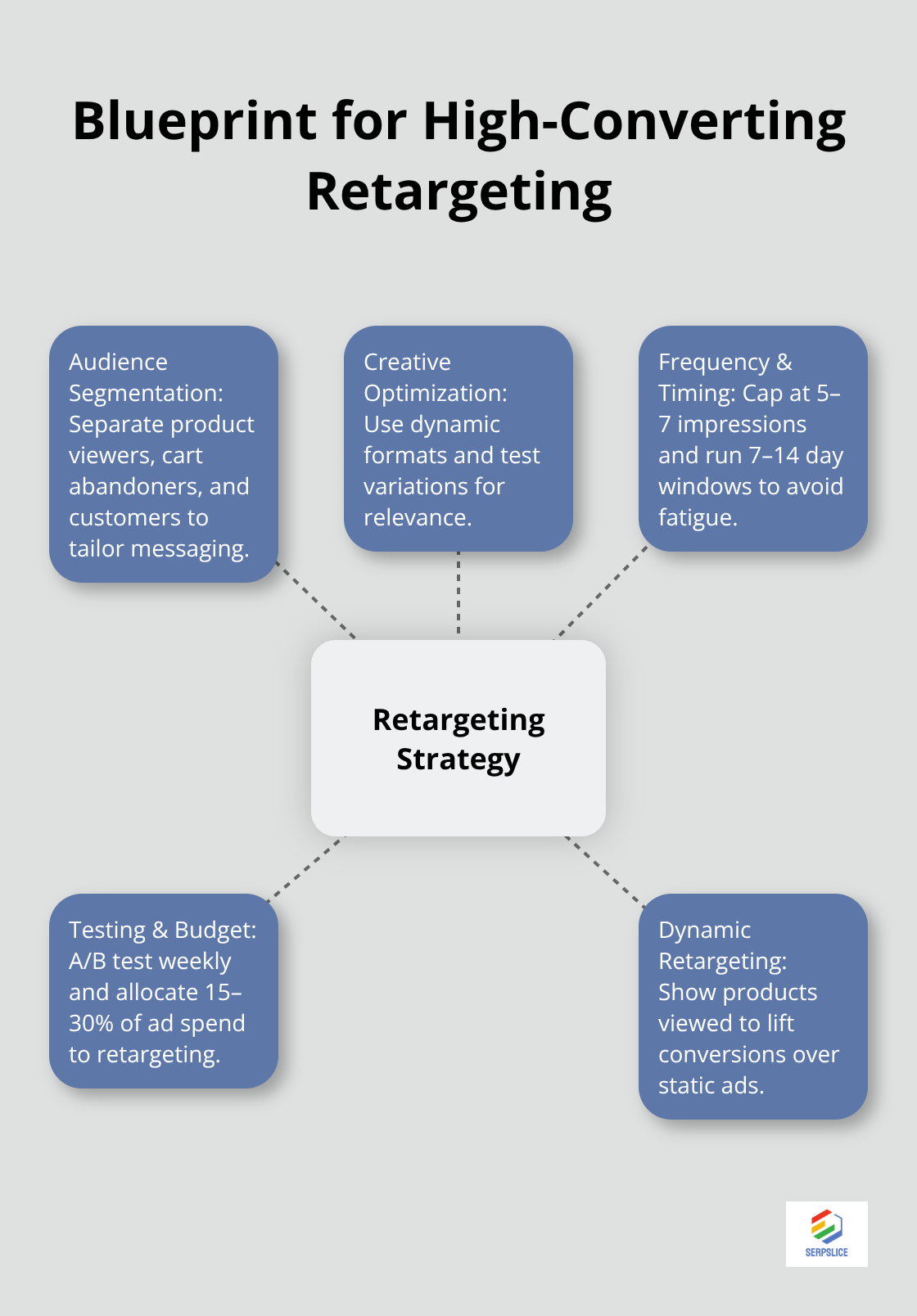
A/B testing different creative elements and messaging approaches reveals what resonates with your specific audience segments. Test ad copy variations that speak directly to each segment's needs and pain points. Dynamic retargeting shows specific products visitors viewed and increases conversion rates compared to static ads.
Allocate 15-30% of your overall ad budget to retargeting campaigns and focus on value-based bidding strategies that personalize campaigns effectively. Monitor performance metrics weekly and adjust campaigns based on conversion data rather than vanity metrics like impressions.
Retargeting strategies transform digital marketing performance and convert lost website visitors into paying customers. The data speaks clearly: retargeted ads achieve conversion rates of 8-12% compared to 1-2% for cold traffic, while they deliver return on ad spend of 4.2× at costs 50% lower than traditional search campaigns. Smart implementation requires strategic audience segmentation, dynamic creative optimization, and proper frequency management.
Success demands consistent execution and testing rather than perfect technical foundations. Start with basic website visitor retargeting, then expand to cart abandonment and customer retention campaigns as you gather performance data. Allocate 15-30% of your advertising budget to retargeting campaigns with 7-14 day windows for optimal results (focus on pixel-based tracking for broader reach and dynamic product ads for personalized experiences).
We at SERPslice Inc help businesses implement comprehensive digital marketing strategies that maximize ROI through data-driven approaches. Our methodology combines retargeting with SEO, PPC, and social media for integrated campaigns that deliver measurable results. Contact us to transform your digital marketing performance with proven retargeting techniques.
Protected by Security by CleanTalk